SEO


Most people define enterprise SEO by the wrong thing. They count pages. They count revenue. They count budget.
None of that captures what the work actually is.
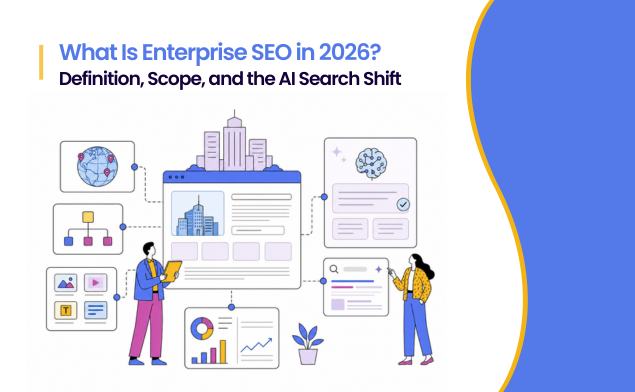
Enterprise SEO is a different discipline, not a louder version of small business SEO.
SMB SEO is craft, one person shaping one site with care. Enterprise SEO is systems engineering, where the goal is to produce quality at volume across thousands of templates, dozens of stakeholders, and multiple markets, without any single page becoming a liability.
The skills, tools, decision speed, risk profile, and ROI horizon all change.
This guide cuts through
Most articles open with a number. One million pages. Ten thousand URLs. A revenue threshold. These are useful reference points, but they are not what makes SEO “enterprise.”
Google’s own crawl budget documentation defines a large site as anything with more than one million unique pages.
The SEO industry usually drops the threshold to around ten thousand URLs, the point where manual page-by-page tactics begin to break. Both numbers are real triggers. Both miss the deeper point.
A blog with twelve thousand archived posts is technically large, but it is not an enterprise SEO problem.
A two thousand page B2B SaaS site running across four markets, three languages, two CMSs, and a regulated industry is an enterprise SEO problem, regardless of URL count.
Enterprise SEO begins where SEO stops being a marketing tactic and starts being a cross-functional operating system. The real triggers are:
A simple field test: when changing a single title tag requires sprint planning, ticket triage, staging QA, and stakeholder sign-off, you are doing enterprise SEO. The work is no longer about ideas. It is about shipping ideas through an organization.
Large e-commerce, B2B SaaS at scale, marketplaces, publishers, multi-location brands, financial services, healthcare networks, and travel platforms all live in this zone.
In the Indian market, mature B2B SaaS companies, large e-commerce platforms, enterprise services brands, and growth-stage startups crossing the ten thousand URL line are all candidates for an enterprise-grade approach.
The enterprise SEO platforms market is growing at roughly 14% CAGR, which signals one thing clearly: the discipline is consolidating into its own category, separate from general SEO services.
If enterprise SEO is a different discipline, what does it actually cover?
Five areas, all of which barely register in SMB work.
Googlebot has finite attention.
On a five million page site, poor crawl efficiency means your highest-revenue pages get visited every ninety days instead of every seven.
Rankings drift, fresh content stalls, and you do not know why.
Enterprise SEO treats crawl as a financial resource.
Log file analysis, sitemap segmentation by intent and freshness, robots.txt discipline, parameter handling, and crawl traps all become ongoing programs.
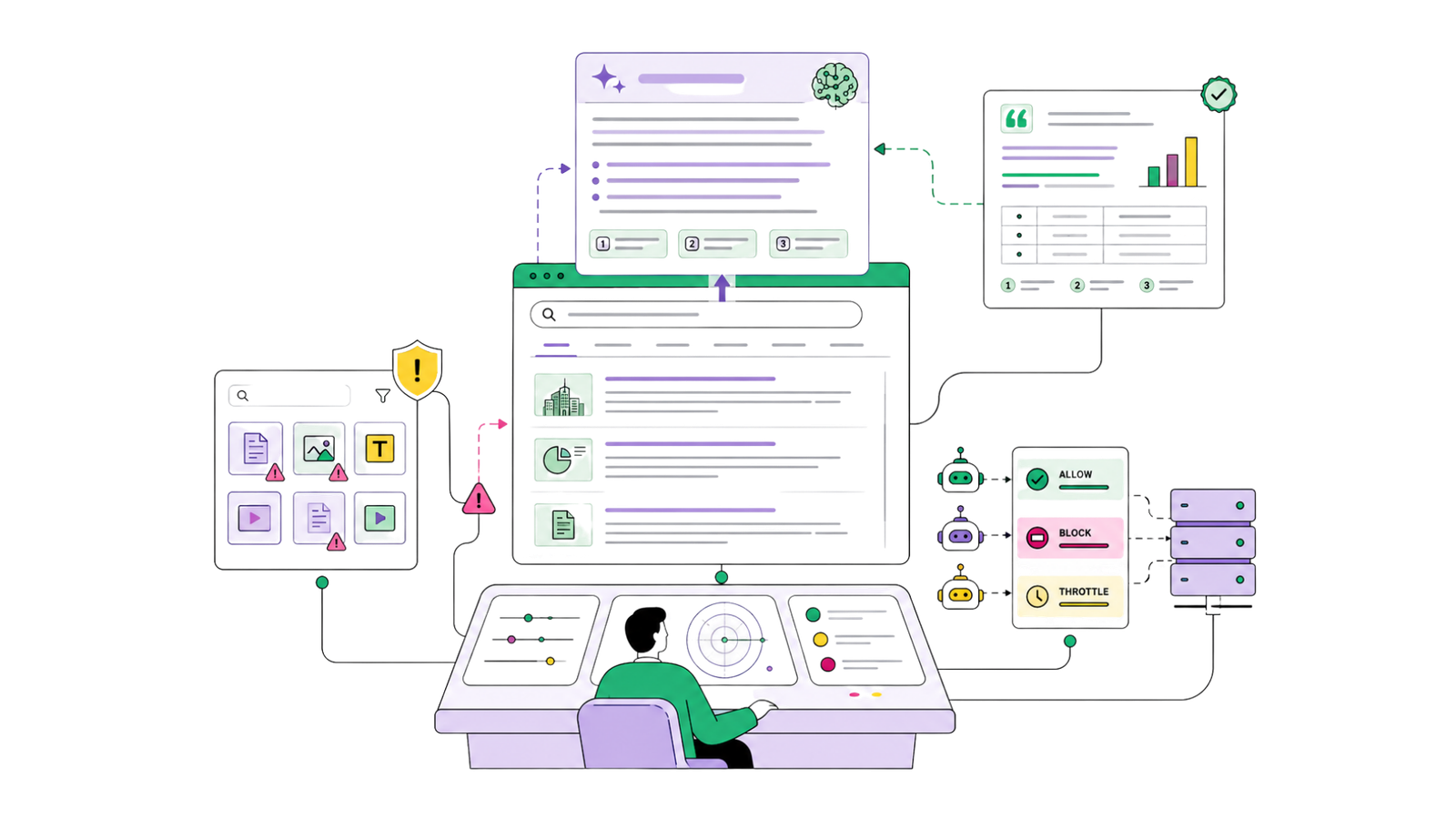
In 2026, this discipline extends further: GPTBot, PerplexityBot, ClaudeBot, and others now add real crawl pressure, and each one needs a deliberate allow, throttle, or monitor policy.
The math forces it. One template change touches thousands of URLs the moment it ships.
Manual, page-by-page SEO breaks down past roughly ten thousand URLs because no team can keep up.
For example: HubSpot runs over one hundred thousand pages targeting more than three million keywords. Nike runs over ten million pages with six million keywords.
None of that is hand-tuned. Enterprise SEO is template-first by necessity.
The work moves up a layer: you optimize the template, define the variables, build QA gates, and let the system produce thousands of consistent pages.
One smart change beats ten thousand small ones.
Technical SEO at the SMB level is mostly hygiene. At the enterprise level, it is engineering.
JavaScript rendering on React, Next.js, or Angular needs constant monitoring.
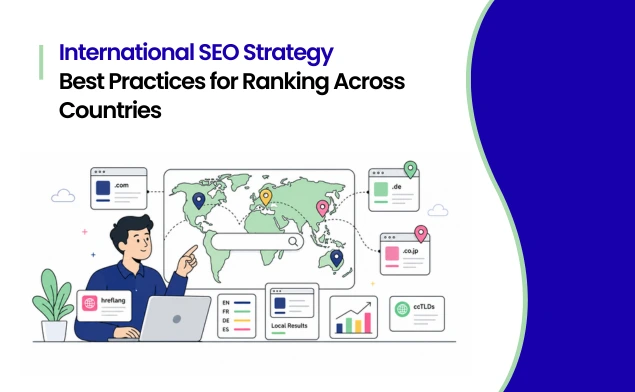
Hreflang governance across markets is one of the most error-prone areas in all of SEO. Canonical consolidation, parameter handling, and faceted navigation each become full workstreams.
The risk profile sharpens too.
A botched migration can erase years of equity in a week. Enterprise SEO teams build migration playbooks, redirect maps, staging audits, and post-launch monitoring as standard practice.
A large content library is an asset that depreciates. Without governance, decay sets in: duplicate pages, cannibalization, orphaned URLs, outdated facts, broken internal links.
Enterprise SEO defines publishing standards, refresh cadences, retirement criteria, and internal linking rules.
Content audits become quarterly programs, not annual projects.
Cannibalization is monitored cluster by cluster. Old pages get refreshed, consolidated, or retired with intent, not left to rot.
This is the discipline most enterprises underbuild.
SEO sits inside marketing but depends on engineering, product, content, legal, and brand to ship anything meaningful.
Without a governance model, SEO requests sit in backlogs for quarters.
Mature enterprise SEO programs run a SEO Council or Center of Excellence: documented ownership, a clear RACI across functions, embedded SEO inside Agile sprints, quarterly roadmap reviews, and active executive sponsorship.
Frameworks beat heroics every time.

Most comparisons stop at “more pages, more budget, more team.” That is not where the real differences live. These ten are.
SMB SEO is a sculptor’s work, one person shaping one site with detail and feel.
Enterprise SEO is an assembly line that has to produce quality at volume across thousands of templates and pages.
Different goals, different muscles, different definitions of “good.”
SMB SEO can change a title tag the same afternoon.
Enterprise SEO needs ROI justification, an IT sprint slot, QA on staging, legal review where relevant, and three to six months.
The bottleneck is not creativity. It is alignment.
SMB SEO is a marketing tactic owned by one team.
Enterprise SEO is a cross-functional operating system spanning product, engineering, content, legal, and brand.
Treating it as a tactic is how enterprises stall.
A misconfigured template that costs a startup one ranking can cost an enterprise hundreds of rankings and millions in revenue.
The same mistake means different things at different scales. Enterprise SEO is built around preventing low-probability, high-cost failures.
A 0.1% lift in conversion or visibility on a Fortune 1000 site is worth more than a 50% lift on most SMB sites.
The math justifies sustained investment in things that look small in percentage terms.
Google Search Console caps reports at one thousand rows. Standard SMB crawlers cap at ten thousand to one hundred thousand URLs.
Enterprise sites need crawlers handling five hundred thousand to ten million URLs, SSO, role-based access, and API integration into the Business Intelligence(BI) stack.
Tooling is a different category, not a bigger plan.
High-maturity enterprises measure roughly three times more SEO metrics than typical SMB programs and are four times more likely to run a fully integrated enterprise platform.
The dashboards look different because the questions are different.
Someone brilliant at local SEO can cause systemic failures at the enterprise level. The instincts that win for a single location, a single product, a single voice can quietly destroy a multi-market, multi-template program. Different muscle, different mistakes.
SMB SEO often rides on one talented person who knows everything. Enterprise SEO must keep working when that person leaves. Documentation, governance, and process are not bureaucracy. They are continuity.
SMB SEO can show real movement in three to six months. Enterprise SEO has a payback horizon of eighteen to thirty-six months and rewards of ten to twenty times ROI by month forty-eight. CFOs need to know this upfront, because the curve is real and the moat is real.
Across the industry, 91% of marketers report SEO positively impacted their goals.
But the maturity curve is uneven, and most enterprise programs underperform their potential for predictable reasons.
None of them are about strategy. They are structural.
One SEO lead carries the program. They know the site, the stakeholders, the technical debt, and the workarounds.
Nothing is documented. When they leave, the program collapses for six to nine months while the new hire learns what the previous one already knew.
This pattern repeats every two to three years in most large companies.
SEO sits inside marketing but depends on engineering and product to ship anything that matters. Without a SEO Council or embedded model, requests sit in JIRA backlogs for quarters.
The work becomes about lobbying, not strategy. Smart people burn out fighting for sprint slots.
Big brands often assume domain authority will carry them. It will not.
Well, domain authority does not reduce the need for active work. It changes the nature of the threats.
Cannibalization eats market share quietly. Competitors with sharper templates take pieces of the SERP. AI Overviews summarize your content without sending the click. Passive equity decays.
Volume looks like progress until it is not. Publishing five thousand pages onto a crawl-wasted site only amplifies existing weaknesses.
Content volume without governance produces duplication, cannibalization, decay, and crawl tax.
The fix is not less content. It is content with rules.
Enterprise SEO got more complex in the last few months. Three shifts now sit at the center of the work.
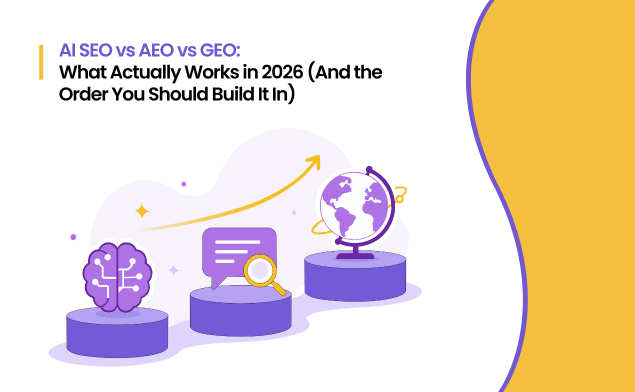
AI Overviews appear in up to 47% of search results.
And, click-through to websites drops by roughly 34.5% on queries where AI Overviews appear.
That sounds like an existential threat until you look at the other number: 63% of marketers report a net positive impact on visibility. The brands optimized for the new surface are gaining share that everyone else is losing.
The lesson is not that AI killed SEO. The lesson is that the SERP is now two distribution channels, blue links and AI answers, and enterprise SEO has to win on both.
Princeton research on Generative Engine Optimization found that content optimized for citation density, statistical specificity, and authoritative quotation can lift AI-answer visibility by up to 40%.
That is not a small effect. It is the new on-page SEO.
GEO is structural work: clean schema, sharp entity definitions, citation-friendly formatting, factual density, and clear authorship signals.
Templates that produce vague, generic content lose. Templates that produce specific, citable, well-sourced content win.
Read more: Benefits of Enterprise SEO and AEO in 2026
Google’s March 2024 spam update and the March 2026 follow-up specifically targeted scaled content abuse, expired domain abuse, and parasite SEO.
Enterprises are uniquely exposed because they often have many publishing partners, microsites, syndication deals, and bulk content libraries.
White-hat governance is no longer a nice-to-have. It is a survival control.
Server logs now show meaningful traffic from GPTBot, PerplexityBot, ClaudeBot, Bytespider, and others.
Each one represents a strategic choice. Allowing them can win citation shares inside AI answers. Blocking them protects content from being used to train competing models.
Throttling them preserves crawl efficiency. There is no universal right answer, but there is no longer an excuse for having no policy.
Context is only useful if it changes how you operate.
These eight plays are the operating posture of an enterprise SEO program built for the current search environment.
Treat traditional SERPs and AI Overviews as two distribution channels sharing one content infrastructure.
Optimize templates for both: clear entities, structured data, citation-friendly formatting, statistical density, and explicit authorship.
The goal is that the same page should rank in blue links and earn citations inside AI summaries. Designing for one and ignoring the other leaves real share on the table.
Audit which templates drive 80% of revenue traffic and concentrate strategy, QA, and experimentation there.
Every template change should pass through SEO review before deployment. Compounding gains at scale live at the template layer, not the page layer.
This single shift changes the math of how an enterprise SEO program produces ROI.
Use ML forecasting and template-level impact modeling to project keyword trajectory, content decay, and template performance before drops happen.
Reactive dashboards are a tax that pays the analyst, not the business. Forward-looking models tell you where to act next quarter, which is the only horizon that matters for prioritization.
A cross-functional team with members from product, engineering, content, legal, and brand who govern SEO decisions together.
This is the single highest-ROI structural change most enterprises have not yet made. It turns SEO from a lobbying exercise into a planned program.
The 2024 and 2026 spam updates punished scaled low-quality content and parasite tactics hardest.
Document publishing standards, retirement criteria, partner content rules, and microsite policies. Audit bulk libraries quarterly.
White-hat governance is now a survival control, not a values statement. The brands that get hit by spam updates almost always have weak governance, not weak intent.
Run log file analysis monthly. Segment sitemaps by intent and freshness.
Set explicit policy on AI bots: which to allow, which to throttle, which to monitor for citation share.
Wasted crawl is wasted revenue. On a site of any meaningful size, this work pays for itself before the quarter ends.
Decayed pages, orphaned URLs, and weak entity coverage are the three quiet killers on large sites.
Treat internal linking as a continuous program with monthly reviews, fed by crawl data and analytics, not an annual audit task. Entity clarity also feeds GEO performance directly, so the work compounds across surfaces.
Connect SEO to pipeline and revenue inside the BI stack.
Track qualified traffic, assisted conversions, and revenue contribution by template and topic cluster.
Rankings are a leading indicator. Revenue is the scorecard that protects budget in CFO conversations and survives leadership changes.
These eight strategies I mentioned are not a checklist. They are the operating posture of an enterprise SEO program that can defend its visibility through algorithm shifts and earn its budget through measurable revenue.
A practical self-diagnostic. The more of these that apply, the further you have moved past what small business SEO can handle.
If three or more apply, then your SEO needs an enterprise-grade approach, not a scaled-up SMB one.
The gap is structural, and it will not close by adding more content or more keywords.

The operating model of a healthy enterprise SEO program is recognizable. Six things show up every time.
Clear ownership across functions. RACI in writing. Escalation paths defined. A SEO Council or Center of Excellence that meets on a schedule and ships decisions. New team members can read the model and understand the program in a day.
Decisions made at the template level, not the page level. QA gates before any template ships. Every template is tied to a revenue or visibility hypothesis. This single discipline produces more lift than any volume of one-off page optimization.
Log file analysis, crawl efficiency tracking, indexation monitoring, and rendering checks treated as ongoing disciplines, not annual audits. Issues caught in week one cost an hour. Issues caught in month six cost a quarter of revenue.
Publishing standards. Refresh cadence. Retirement criteria. Internal linking rules. Cannibalization monitoring. The library grows on purpose, not by accident, and shrinks on purpose when it should.
Visibility, qualified traffic, pipeline, and revenue, not just rankings. Integrated reporting feeding the BI stack, not isolated SEO dashboards no one outside the team reads. The program defends its budget with numbers leadership already trusts.
Especially under the conditions set by the 2024 and 2026 spam updates. No shortcuts. No parasite tactics. No scaled low-quality content.
Disciplined execution is what produces compounding gains.
Enterprise SEO is a different discipline from small business SEO.
It is defined by complexity, governed by frameworks, and measured against revenue. The teams that succeed at it stop thinking about pages and start thinking about templates, governance, and systems.
Most enterprises do not need a louder SEO program. They need a better-governed one.
If the signals in this guide describe your current situation, the right next step is a strategic conversation, not a proposal.
Digital SEO Land works with growth-stage and enterprise brands on white-hat, governance-led enterprise SEO programs built around template discipline, technical rigor, and revenue measurement.
We will tell you honestly where your program sits and what would actually move it forward.
Talk to our enterprise SEO team when you are ready for that conversation.

AI Services





Link Building





Resources