SEO
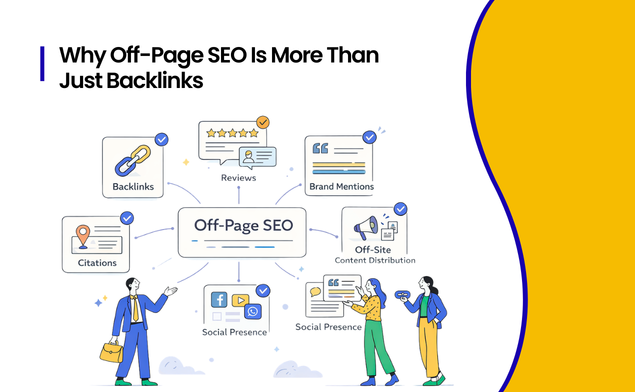

If you ask most business owners what off-page SEO means, the answer is almost always the same: backlinks.
And to be fair, that belief did not come from nowhere. For years, SEO conversations were dominated by links. More links meant more authority. More authority meant better rankings. Simple.
But search has grown up. And so has off-page SEO.
Today, rankings are influenced not just by how many websites link to you, but by how consistently your brand appears across the web. It is about trust signals, reputation, visibility, and how often your business shows up in places people already trust.
Backlinks still matter. They absolutely do. But they are just one part of a much bigger system.
In this guide, we are going to break it down clearly:
What backlinks actually do well
What off-page SEO includes beyond links
And how to decide whether you need link building, full off-page SEO, or both
Let’s clear the confusion once and for all.
If you only remember a few things from this guide, let it be these:
Now let’s start by giving backlinks the credit they deserve.
Before we expand the definition of off-page SEO, it is important to give backlinks the credit they deserve.
Links still play a powerful role in how search engines evaluate websites. When done properly, they can move the needle. For example:
A high-quality backlink acts like a vote of confidence. When a relevant and trusted website links to one of your pages, it signals that your content is worth referencing.
This can help new pages gain traction faster and older pages regain visibility.
You have probably seen this happen.
A service page sits on page two or three for months. Traffic is there. The content is solid. But it does not break into the top results.
Strategic link acquisition can sometimes provide that extra authority boost needed to move a page out of that stuck zone.
One reason businesses love link building is because it feels tangible.
You can
That clarity makes link building easy to report and easy to justify.
Not all links are equal.
Strong backlinks usually have:
That is why link building services focused on quality can deliver strong page-level results.
But here is the important shift.
Backlinks improve pages. And off-page SEO builds brands.
Let’s look at what that bigger picture actually includes.
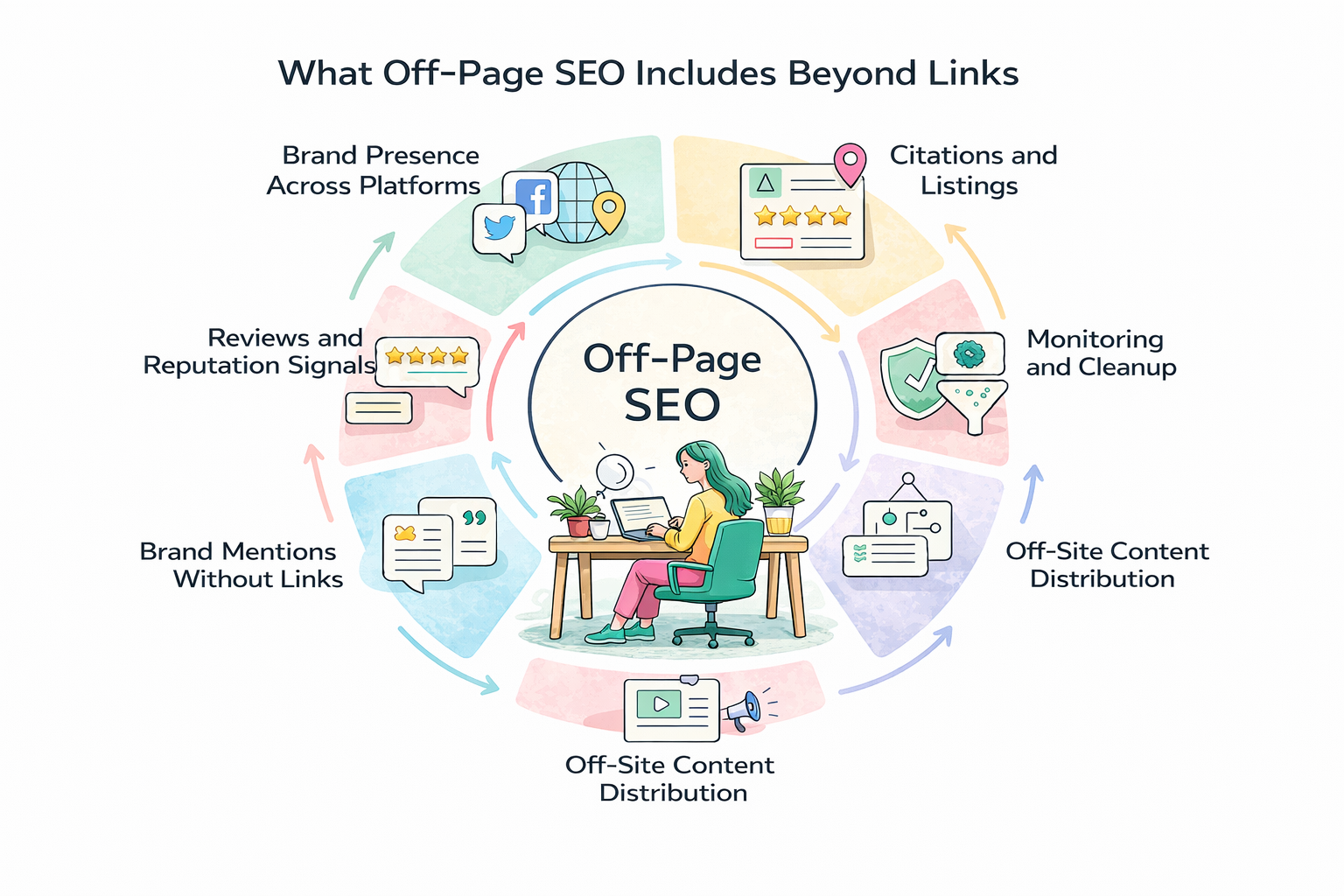
Backlinks strengthen individual pages. Off-page SEO strengthens the entire brand.
When done properly, offsite seo builds trust signals across the web so search engines, AI systems, and users all see your business as credible and established.
Here is what that really includes.
Your website is just one place where your brand lives.
But what about:
Getting your brand to appear consistently across trusted platforms sends a strong signal. It tells search engines that your business is real, active, and recognized beyond its own website.
Authority is not built in isolation. It is built in repetition.
Consistency matters more than most people realize.
If your business name, address, phone number, or key brand details appear differently across platforms, it creates confusion. Confusion weakens trust.
Structured citations and directory management make sure your information is accurate and aligned everywhere it appears.
For local and multi-location businesses, this is critical. But even for SaaS and ecommerce brands, consistent entity data strengthens credibility.
People read reviews before they buy. Search engines know that. Everyone knows that.
Volume, freshness, response patterns, and overall sentiment all shape how trustworthy your brand appears.
Off-page SEO includes actively monitoring reviews, responding strategically, and building a steady flow of authentic feedback.
A business with strong reviews often wins even when competitors have more links.
Not every mention comes with a backlink.
But brand mentions still matter.
When your company is referenced across blogs, news articles, forums, podcasts, or community discussions, it reinforces your presence in the ecosystem.
Repeated mentions across relevant platforms build brand familiarity. Familiar brands are trusted brands.
And trusted brands tend to rank better over time.
Your content should not live only on your website.
Strategic off-site publishing and content distribution help:
This is not about random guest posts. It is about controlled visibility in places that align with your industry and audience.
Off-page SEO is not just about building. It is also about protecting.
Incorrect listings. Negative reputation gaps. Unclaimed profiles. Lost mentions. Toxic link patterns. All of these can quietly weaken authority.
Ongoing monitoring ensures your brand footprint stays clean, accurate, and aligned.
When you step back and look at the full picture, backlinks are one strong lever.
But authority is built through a system.
Now let’s make this practical.
So When Do You Need Link Building vs Full Off-Page SEO?
At this point, the difference should feel clearer.
But most businesses still ask the practical question:
“What do we actually need right now?”
Here is a simple way to think about it.
In this case, targeted link acquisition can help push key pages upward faster.
This is where structured, quality-driven link building services make sense.
Here, the goal is not just to move one page. It is to strengthen the entire brand footprint.
That is where comprehensive off page SEO services become the smarter investment.
Link building improves pages. Off-page SEO builds reputation and trust.
Together, they create sustainable momentum.
Ask yourself:
If more than two of these answers make you uncomfortable, it may be time to rethink your off-page strategy.
Backlinks are powerful. They always have been. But they are not the full story anymore.
If you only focus on links, you strengthen pages. If you build real off-page authority, you strengthen the brand.
And when the brand is strong, every page benefits.
Search engines look for consistency.
Users look for trust.
AI systems surface brands that appear credible across multiple sources.
All of that goes far beyond a backlink count.
The real question is not “Do backlinks work?”
The real question is “Is your brand trusted beyond your own website?”
If you are not sure where you stand, that is where a proper off-page review helps.
At Digital SEO Land, we look at your complete authority footprint, not just your link profile. We identify gaps, missed opportunities, and quick wins that can move both rankings and brand trust.
If you want clarity on whether you need focused link building or a full off-page authority strategy, book a call with our off page seo expert.
We will walk you through what is working, what is missing, and what will actually move the needle for your business.
No fluff. Just a clear path forward.

AI Services



Link Building



Resources