AI
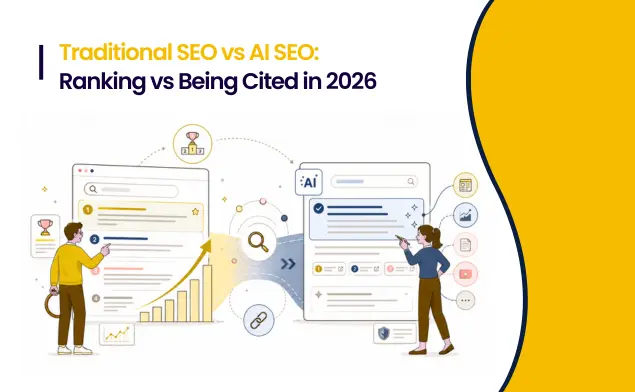


Here is a number that should change how you think about search: when Ahrefs studied 15,000 queries, only about 12% of the URLs cited by AI tools also appeared in Google’s top 10 results. The other 88% came from pages that do not rank on page one at all.
Read that again.
Ranking well on Google no longer guarantees you get mentioned inside an AI answer. And getting cited by AI does not mean you rank.
That single fact is why the whole Traditional SEO vs AI SEO debate is framed wrong. Most articles treat it like a cage match: old way versus new way, pick a side.
But the reality in 2026 is quieter and more useful.
Ranking and citation have split into two related but separate outcomes, and the smart move is to earn both from one foundation.
Today I will walk you through
The popular version goes like this. Traditional SEO gets you clicks. AI SEO gets you citations. Old world earns blue links, new world earns mentions inside ChatGPT and Google’s AI answers.
That framing is not wrong. It is just too shallow to plan around. It makes people believe they must choose one track and abandon the other. And that’s what’s wrong.
The real shift is at the URL level. As Ahrefs’ study on 15,000 queries showed, only around 12% of AI-cited URLs overlap with Google’s top 10. So the page that ranks and the page that gets quoted by an AI are often not the same page.
This is actually the whole argument.
You are no longer optimizing for one destination. You are optimizing for two outcomes that sometimes reward different signals.
I will show what traditional SEO still does for your pipeline, what AI SEO (also called GEO, generative engine optimization) adds on top, why clicks are shrinking without disappearing, why each AI engine cites sources differently, and what Google itself says about “AI hacks.”
Phew that’s a lot!
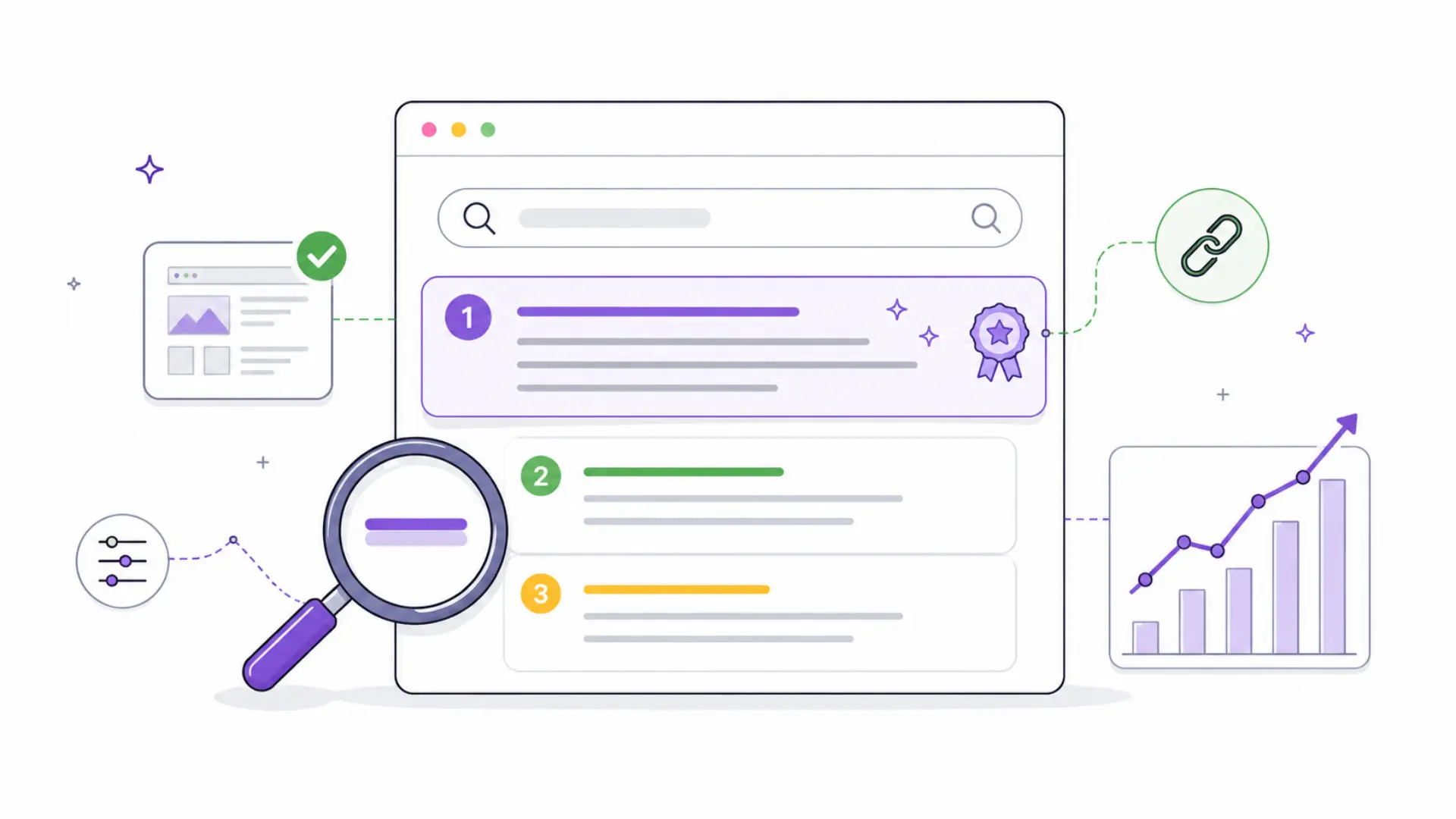
Let’s start with the basics first. Traditional SEO earns rankings, and rankings earn clicks. Those clicks bring qualified traffic to your pages, and that traffic turns into leads, calls, and revenue.
Nothing about AI changes that chain of value.
When someone searches with intent to buy, compare, or hire, a strong organic presence puts you in front of them at the exact moment they are deciding.
That is still the highest-leverage position in digital marketing.
Traditional SEO is measured on things you can tie to money: keyword positions, organic sessions, conversion rate from organic, cost per acquisition, and return on the investment.
These are the numbers a founder or marketing lead actually cares about, and actually they still matter in 2026.
Get this straight.
AI features do not run on a separate index. They pull from the same core Search systems that reward well-structured, authoritative, trustworthy pages.
So the work that earns rankings also feeds the systems that decide which pages get surfaced inside AI answers.
Traditional SEO is not the old way and never will be. It is the foundation the new way stands on.
I will come back to Google’s own words on this shortly.
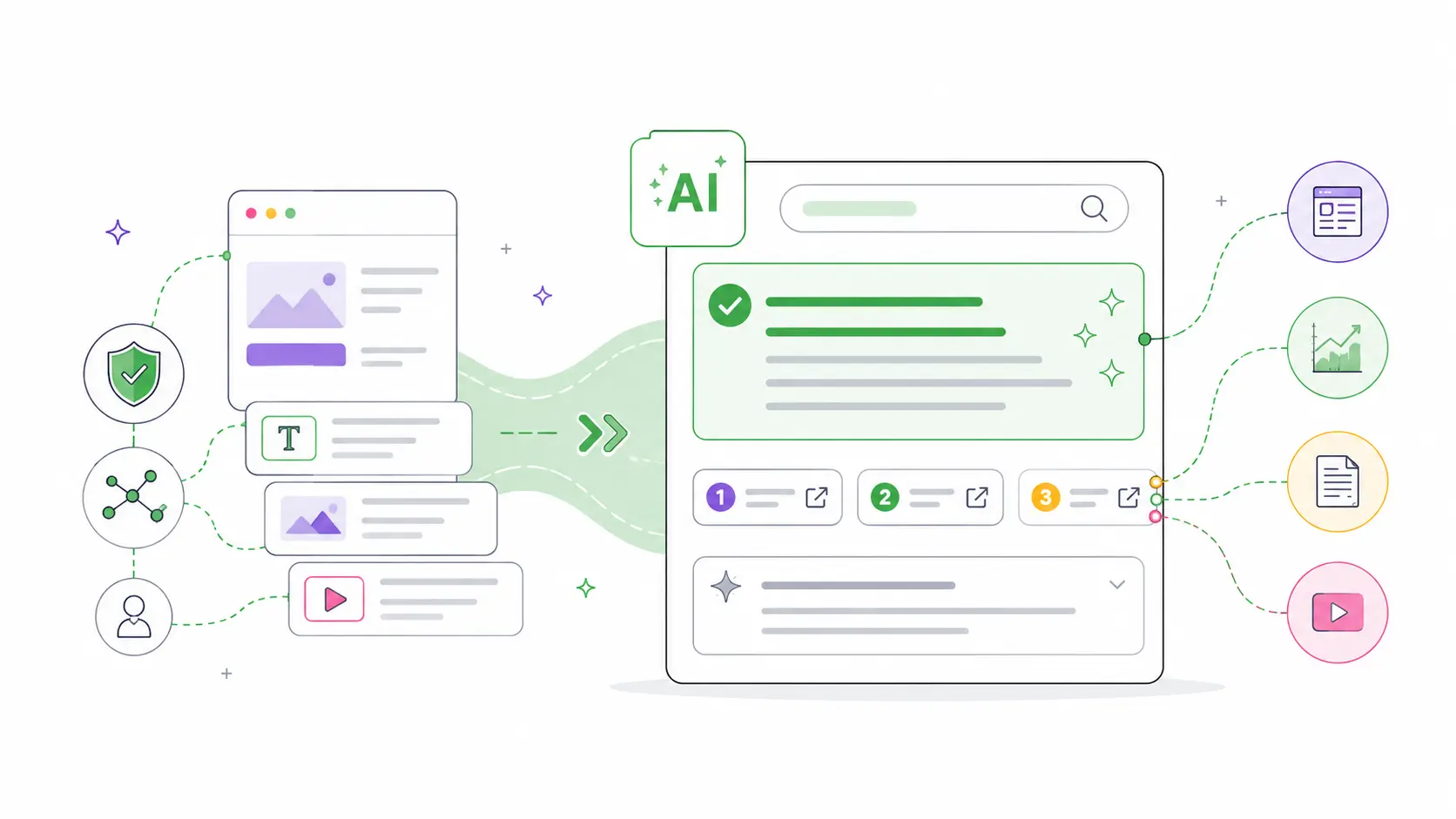
Now the new player in the game, AI SEO, or generative engine optimization and its younger sibling answer engine optimization (AEO), has a different target.
Instead of only ranking a page to earn a click, the goal is to become the source an AI model trusts and cites when it writes an answer. Think of it as being quoted inside the response, not just listed under it.
You see this in action about 100 times a day. You ask ChatGPT, Perplexity, or Google’s AI Overview a question, and it gives you a synthesized answer with a few sources credited.
GEO is the practice of being one of those credited sources.
Ranking is about position on a results page. Citation is about presence inside the generated answer itself.
A user might never scroll to the blue links because the AI already summarized the topic and named its sources – that’s what Google AI overviews does.
If your brand is one of those names, you win visibility even when nobody clicks a traditional listing.
Hence accordingly, the measurements change too.
With AI SEO, the metric moves from clicks alone to share of citations and share of AI visibility: how often your brand appears as a trusted source across the AI answers your buyers see.
It matters because Semrush found that 88.1% of queries triggering Google AI Overviews are informational in nature, which is exactly the top-of-funnel research your buyers do before they ever contact you.
So if recently you have seen a drop in your organic traffic or it is getting difficult to reach your traffic target per quarter then AI Overviews are a big reason.
Clicks are getting squeezed, and the data is consistent.
Seer Interactive found that for queries showing an AI Overview, organic click-through rate fell from 1.76% → 0.61% in September 2025.
Pew Research saw the same pattern from the user side: people click a result only 8% of the time when an AI Overview is present, compared to 15% when it is not.
The AI answer satisfies many searchers before they ever click. That is the compression.
A tempting reaction is to chase keywords that do not trigger AI Overviews.
Seer’s data closes that escape hatch. Queries without an AI Overview do still earn more clicks, 1.76% versus 0.61% organic CTR, but those non-AIO queries lost 41% of their click-through rate year over year between September 2024 and September 2025.
So even the “safe” keywords are declining. You cannot outrun this by re-targeting.
Multiple independent studies point the same direction.
For example, Ahrefs found a 34.5% drop in position-one CTR when an AI Overview was present, based on 300,000 keywords, and a later read showed that effect deepening to a 58% reduction for top-ranking content.
A separate randomized field experiment found AI Overviews cut organic clicks on triggered queries by 38%, while users rated their experience just as highly.
Different methods, different datasets, same conclusion.
The takeaway is not “SEO is dead.”
The takeaway is that clicks alone are now an incomplete scoreboard.
You need to measure visibility and citations alongside clicks, because a large share of your value is now delivered inside the answer, not only through the click.
If you are still only counting clicks, then you are undercounting your actual reach and making the wrong budget decisions.
Note: At this moment, companies have to experiment by investing in AI channel efforts to figure out how their customer acquisition is getting affected.
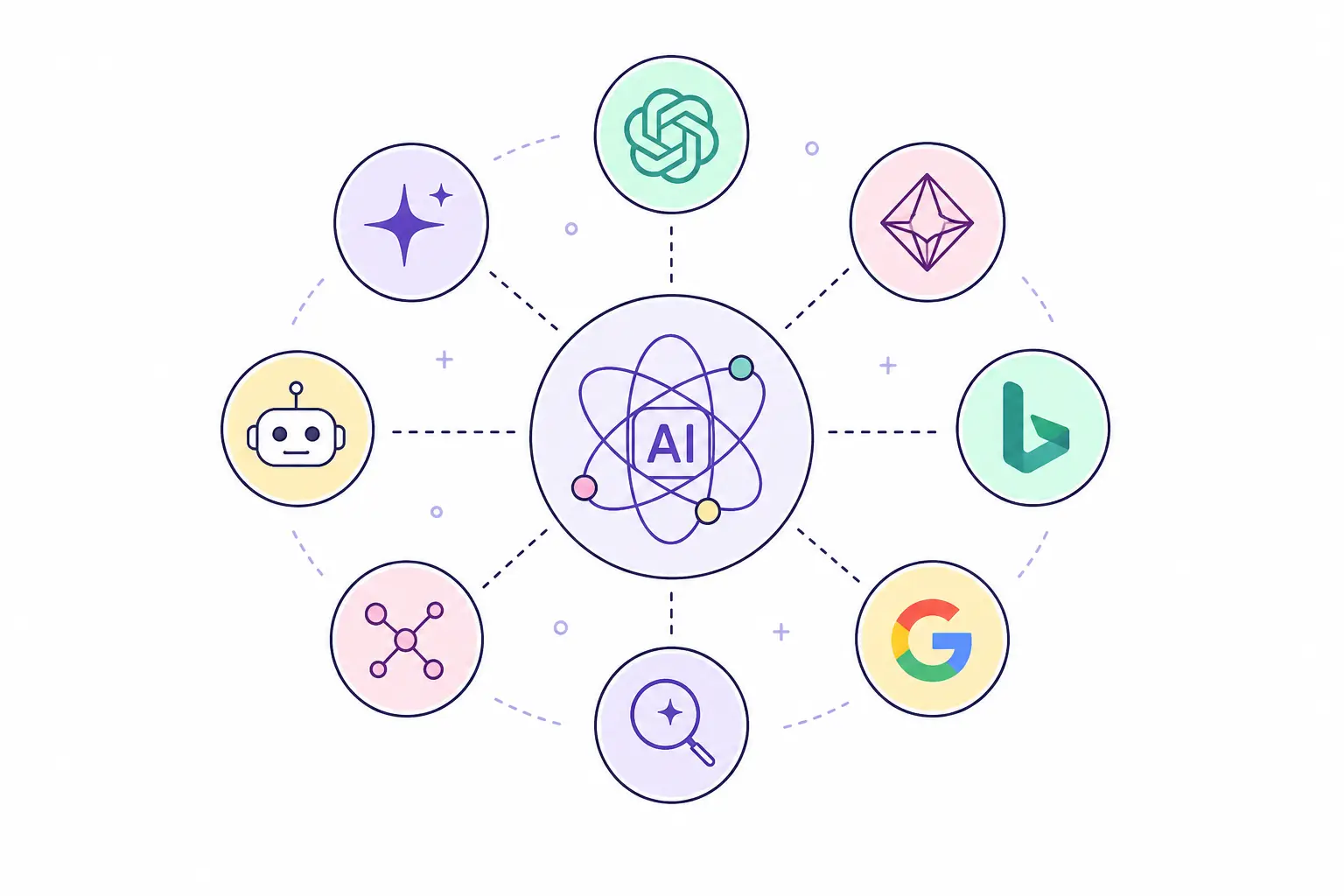
The mistake that cost teams the most is treating “AI” as one destination.
Unfortunately it is not.
Research on citation behavior found that only 11% of domains are cited by both ChatGPT and Perplexity for the same query, and 71% of all cited sources appear on just one platform.
Different engines quote different pages. Optimizing for a single generic “AI” is like optimizing for “the internet.”
The patterns are distinct enough to plan around:
Pay attention to the last metric: Google’s AI answers are the one place where strong traditional rankings still carry a big citation advantage, which reinforces why the foundation SEO work pays off twice.
The core reason is how these systems find information.
Engines like ChatGPT and Claude lean on trained knowledge and topic authority.
Engines like Perplexity and Gemini use real-time retrieval, which rewards factual consensus, fresh links, and modular passage structure.
One group cares about accumulated authority. The other cares about what it can fetch and verify right now.
That is why the same query pulls different sources across tools.
Google’s own Search Central AI guidance, published May 15, 2026, is blunt:
“The best practices for SEO continue to be relevant because our generative AI features on Google Search are rooted in our core Search ranking and quality systems.”
In plain terms, there is no secret AI track. The same fundamentals that earn rankings also power AI features. Period.
The guide also puts a stop to a popular myth:
Files like llms.txt get no special treatment for Google Search.
Google’s crawler may discover such a file, but there is no preferred indexing pathway and no ranking benefit. So the sellers pushing “add this file and get cited” are selling you nothing for Google’s ecosystem.
Note: This guidance applies to Google only. ChatGPT, Claude, and Perplexity may play by different rules, which loops right back to the point that AI is not one channel. So while you can safely ignore hacks for Google, you still need a broader approach for the engines Google does not control.
If AI can summarize your page in one line, why would it cite you over a hundred pages that say the same thing? It usually will not.
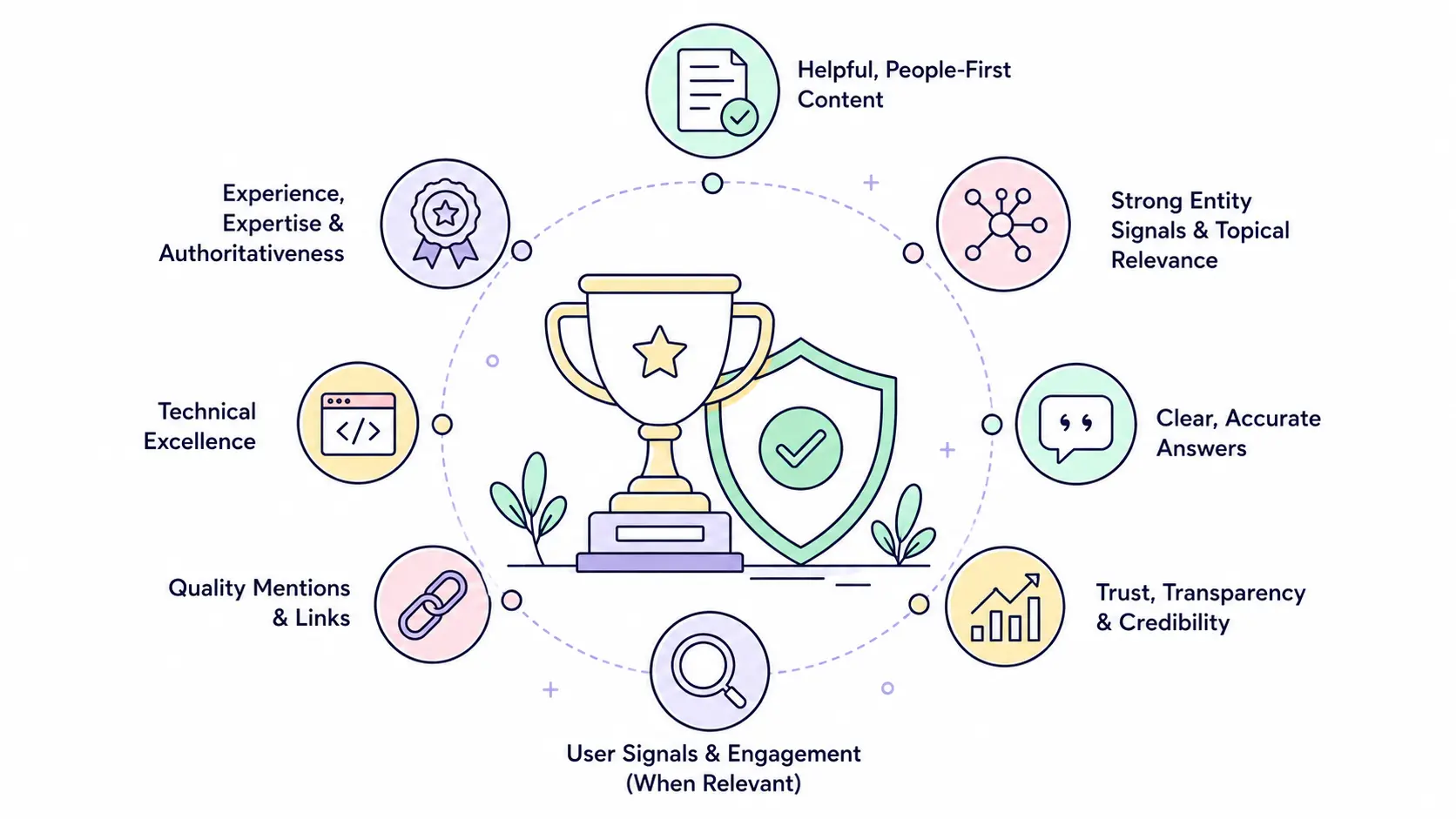
What earns citations is content that is not a commodity: original data, first-hand experience, and named expert authorship.
One industry-reported figure suggests 96% of pages cited in AI Overviews carry verifiable E-E-A-T signals
Treat that as directional, since it is industry reported rather than a Google-published number, but the direction is clear. Experience, expertise, and trust are the differentiators.
The other half is the format.
Pages that actually influence AI answers tend to be longer, more modular, and full of extractable evidence.
Which means:
Traditional SEO vs AI SEO was never the real fight. The real shift is from ranking to earn clicks toward being the source AI trusts to cite, and the two now reinforce each other rather than compete.
It is quite evident now that clicks are compressing, but not vanishing.
AI is not one channel but several, with each picking their source of information and citing differently. And Google has confirmed there are no hacks: fundamentals, quality, and trust are what work.
The businesses that are embracing the shift and are winning did not pick a side. They have built one honest, expert, well-structured foundation that earns rankings on Google and citations across Google AI Overviews, ChatGPT, and Perplexity, in English and in the regional languages their customers use.
If you want to see where you actually stand in the AI search landscape, then you can always request a free search and AI visibility audit from Digital SEO Land.
We will show you where you rank on Google and where you are, or are not, being cited across today’s AI answers, so you know exactly what to fix first.
No. Traditional SEO remains the foundation for organic rankings and Google’s AI search features. Google confirms that AI Overviews and AI Mode use its core Search ranking and quality systems.
The difference between SEO vs AEO vs GEO is quite simple. SEO helps pages rank in traditional search results. AEO focuses on providing direct answers, while GEO focuses on earning mentions and citations inside generative AI responses. Google considers AEO and GEO part of the wider SEO process.
Yes. Ranking and citation are related, but they are not the same. The research discussed in this article found that only about 12% of AI-cited URLs also appeared in Google’s top 10 results.
Usually not. Build one useful page for people, then make it easy to understand with direct answers, descriptive headings, facts, comparisons, and clear steps. Google says content does not need to be rewritten specifically for AI systems.
Schema can help search engines understand your content and make pages eligible for certain search features. However, it is not a direct AI citation factor, and Google says no special AI schema is required.
Not for Google Search. Google says it ignores llms.txt for rankings and generative AI visibility. The file may be used by other services, but it will neither help nor hurt your visibility on Google.
Where available, use Google Search Console’s Generative AI performance report to track impressions from AI Overviews and AI Mode. You should also monitor how often your brand and pages appear across a fixed set of buyer questions on major AI platforms.
Yes, provided the final content is accurate, useful, relevant, and original. Generating large numbers of low-value pages without adding anything helpful can violate Google’s scaled content spam policies.
You do not need a completely separate strategy for each platform. Start with the same strong SEO foundation, but track each engine separately because they may retrieve, interpret, and cite different sources.
Content with original data, first-hand experience, clear expert authorship, specific facts, and direct answers has the strongest chance. Generic summaries are easier for AI systems to replace and give them little reason to cite your page.

AI Services




Link Building





Resources