
If you run a startup, there’s a good chance SEO has felt like a constant tug of war. One week you’re deep into writing content. The next you’re fixing technical issues the site suddenly decided to show you. Then someone tells you links are the real growth driver and you wonder if you’re focusing on the wrong thing altogether.
It’s not that SEO is confusing. It’s that all three pieces matter, but they don’t matter equally at every stage of your journey. Trying to balance everything at once is what creates the overwhelm.
The good news is that once you understand how content, technical SEO and link building fit into the bigger picture, you get clarity. And clarity is exactly what early stage teams need.
In this article, I’ll walk through a simple stage based approach that shows you exactly what to focus on so you’re not spreading yourself thin.
Before you think about balancing your startup SEO, it helps to understand what each part of SEO actually does. Most founders hear about content, technical SEO and link building all the time, but the real value of each lever becomes clear only when you see how they work together.
Content is how people find you. It gives your startup a way to show up for the problems your customers are already searching for. Good content builds visibility, shapes your positioning and gives Google the signals it needs to understand what your business is about.
72% of marketers believe creating relevant content is crucial for SEO, with sites that invest in high‑quality content often seeing traffic lifts of up to 10x versus low‑quality content.
This is the part most founders or marketing teams do not like but everyone has to deal with.
Technical SEO makes sure your site is fast, crawlable and easy for both humans and search engines to use. When technical issues pile up, they slow down your growth and limit the impact of your content.
A clean technical base doesn’t guarantee results, but a broken one definitely blocks them.
95.2% of websites experience 3XX redirect issues, which can negatively impact crawl efficiency and page load times.
One 2025 roundup also notes that only about one‑third of sites currently pass Google’s Core Web Vitals thresholds, suggesting startups can gain a competitive edge simply by getting into this “healthy” minority.
You already know that backlinks act like trust signals. When other websites point to you, Google sees your site as more credible. That credibility is what helps your pages rank higher and faster, especially in competitive spaces.
For startups, link building is usually the hardest lever to pull early on, but it becomes one of the biggest growth drivers once you have content worth amplifying.

Now it’s clear for you what each SEO lever actually does. But the real challenge remains figuring out how to use them without spreading yourself too thin.
This is where a stage based approach makes everything easier.
Instead of trying to balance content, technical SEO and link building all at once, you shift your focus as your startup grows. Each stage has only one main priority, and once you understand that, decision making becomes much simpler.
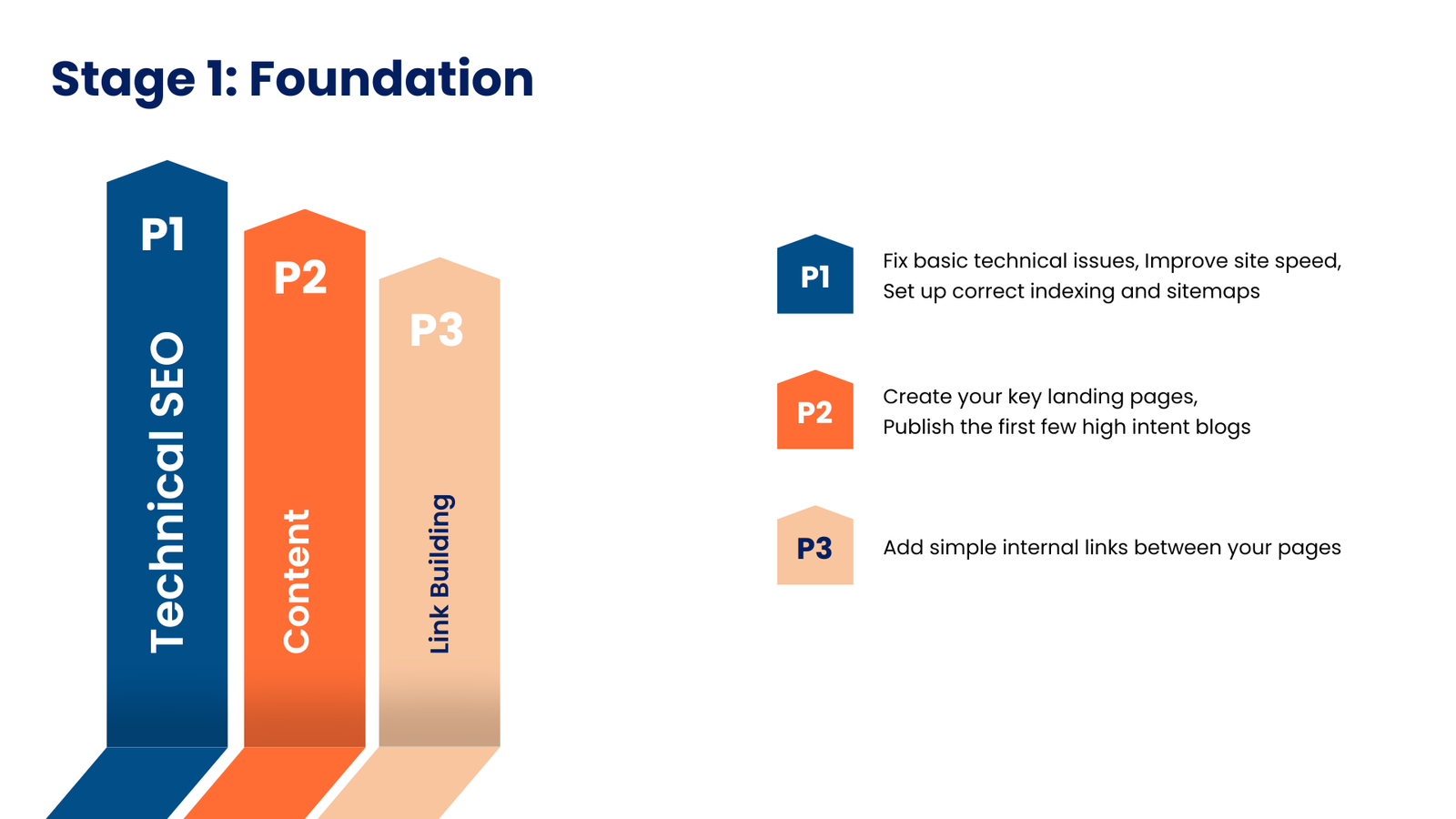
At this stage, your goal is simple. Build a solid base for everything that comes later. Technical SEO plays the biggest role here because your site needs to load fast, be easy to crawl and actually show up in search before any content or link efforts can work.
Once the basics are in place, the next step is creating core pages and a handful of meaningful content pieces that explain who you help and what problems you solve. You don’t need quantity yet. You just need clarity.
Link building is not a priority here because there’s nothing substantial for others to link to. Focus on getting your house in order.
What to focus on now:

This is when things start moving. You already have a functional site and you have published some initial content, so the main lever now is to make the content flow consistent. Content becomes the strongest driver of growth in this stage because Google finally has something to work with.
Now link building also starts becoming useful here because you have pages worth amplifying. Even a small number of high quality links can push your best content forward.
Technical SEO doesn’t disappear. It just becomes maintenance instead of a major project.
What to focus on now:
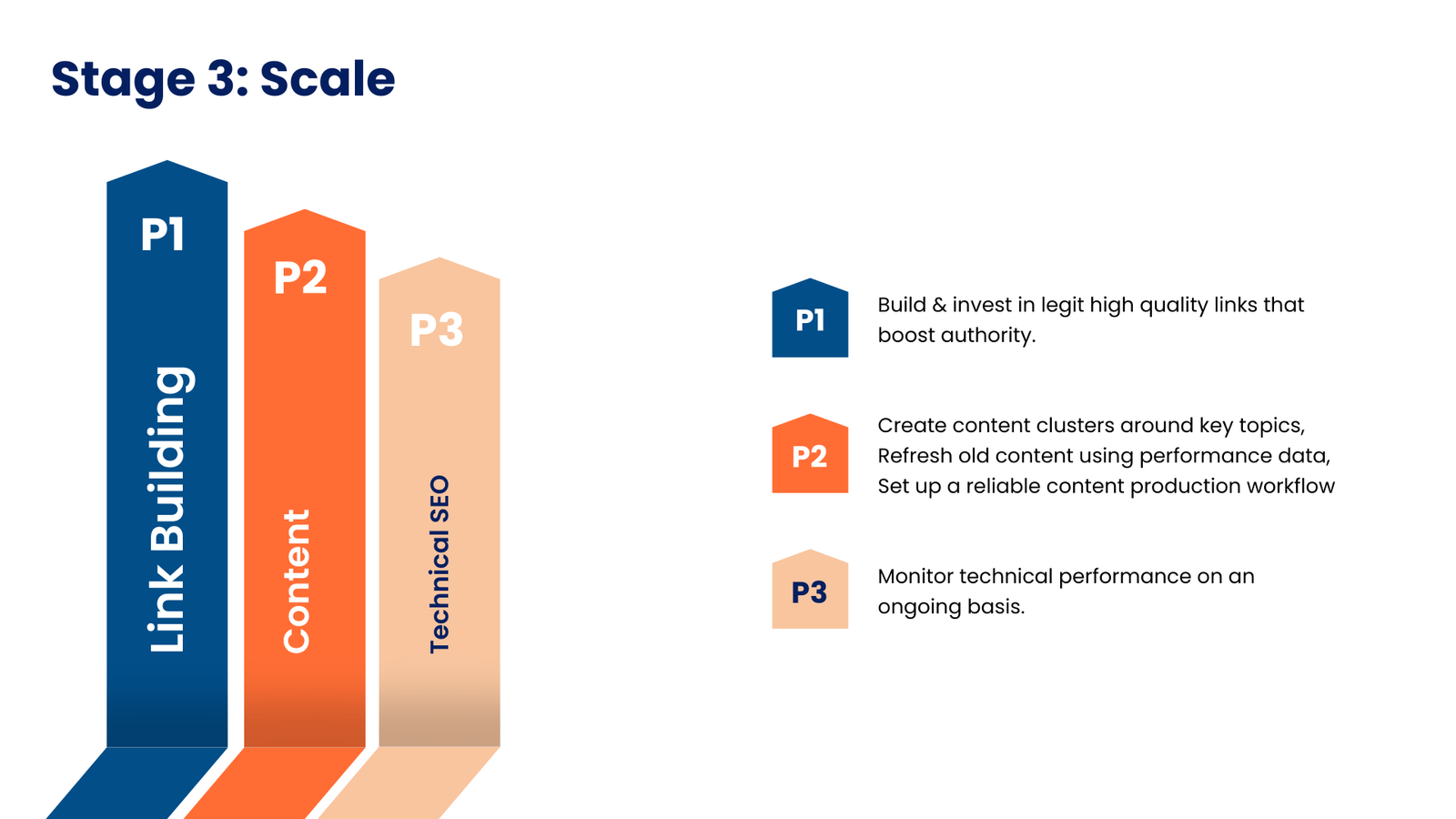
At this stage, you’re no longer trying to be seen. You’re trying to outrank stronger competitors. The biggest lever here is authority, which makes link building the priority. High quality links help you break into tougher keywords and support the content you’ve already built.
Your content strategy also evolves. It’s no longer about single random articles. It’s about clusters, frameworks and systems that let you scale without losing quality and build topical authority. Technical SEO becomes governance, making sure everything continues to run smoothly as the site grows.
What to focus on now:
Even once you understand the three SEO levers, it’s still easy to get pulled in different directions. Startups usually don’t go wrong because they lack effort. They go wrong because they distribute that effort in ways that don’t create momentum. These are some of the patterns that show up again and again.
A lot of teams jump into link building early because it sounds like the quickest way to rank. But links only work when they point to something valuable. Without strong content, they don’t have anything meaningful to support.
Technical SEO is important, but it’s easy to get stuck tweaking small things that barely impact growth. Startups often spend hours chasing tiny improvements while big opportunities sit untouched.
Random blogs don’t help at all. In fact Ahrefs’ 2024 analysis found about 96.55% of pages get zero estimated organic traffic from Google. Now that study also says that many of those pages either have no backlinks or target topics with no search demand.
Content needs to match what people are searching for and connect to the topics your startup wants to own. Without intent, even great writing struggles to rank.
Founders often underestimate how powerful internal links are. They help Google understand how your pages relate to each other and guide authority toward the pages that matter most.
One week it’s all content. The next week it’s all technical. Then everything shifts to link building. Constant direction changes prevent any single lever from working long enough to produce real momentum.
Every startup sits at a different point in its SEO journey, so there’s no single formula that fits everyone. The easiest way to find your balance is to look at what your site already has and where the real gaps are.
Here’s a simple way to decide your next move.
Prioritise technical basics and create a handful of strong pages. You need a stable foundation and clear messaging before anything else will work.
Shift attention toward link building and internal linking. Authority becomes the bottleneck once the basics are in place.
Strengthen your content depth. Add supporting articles, build topic clusters and refine what’s already performing.
Revisit your strategy. Sometimes the issue isn’t effort, it’s direction. Clarifying audiences, improving search intent match or rebuilding your content structure often creates the lift you’re missing.
At the end of the day, balancing content, technical SEO and link building isn’t about doing everything at once. It’s about understanding what matters most at your stage and letting that guide your focus. When you get that part right, the path forward becomes much clearer and far less overwhelming.